Difficulty: Intermediate
A plane that stops cutting cleanly does not always need a new blade. Quite often, it only needs sharpening. Just as often, though, the real problem is somewhere else: a poor fit in the body, a badly adjusted chipbreaker, or a blade system that was designed to be replaced rather than endlessly maintained.
That distinction matters more than it first appears. If you sharpen a blade that should really be replaced, you waste time and still get a disappointing result. If you replace a blade when the real issue is setup, you spend money and solve nothing.
The source for this guide is mainly from two classic woodworking books: Japanese Woodworking Tools: Their Tradition, Spirit and Use by Toshio Odate, which is especially valuable on kanna blades, chipbreakers, blade fitting, and sharpening practices; and The Illustrated Encyclopedia of Woodworking Handtools by Graham Blackburn, which helps frame how different planes and blade shapes are meant to work. Together, they make one thing clear: before deciding whether to sharpen or replace a plane blade, you need to know what kind of blade you have, what kind of cut the plane is meant to take, and whether the fault is really in the blade at all.
The short answer
Sharpen the blade when the edge is dull, but the blade is still sound, seats properly, sharpens predictably, and then holds its edge for a reasonable amount of work.
Start thinking about replacement when sharpening no longer restores dependable performance, when the back geometry or seating has become increasingly troublesome to maintain, when edge life becomes poor despite correct sharpening, or when the plane uses a replaceable blade system that was designed to be renewed once dull.
That is the simple version. The useful version is more specific.
First, identify the blade system
Not every plane blade should be treated the same way.
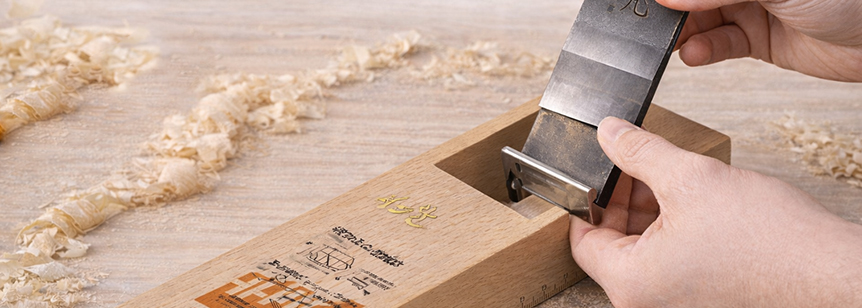
While some Japanese Kanna planes use disposable razor blades, a traditional Japanese kanna blade is usually a laminated blade. In plain terms, that means a very hard cutting steel is forged to a softer supporting metal behind it. The hard steel gives you a keen, durable edge. The softer backing gives that edge support and reduces the risk that the blade will behave like a thin piece of brittle glass. This is one reason traditional kanna blades can perform beautifully and survive many sharpening cycles over a long life.
A modern replaceable blade system is different. Some planes use maker-specific spare blades intended to be swapped in when worn. Others use disposable razor-style blades meant to be discarded once dull. In those cases, replacement is not a sign that anything has gone wrong. It is normal maintenance.
So the first question is not “sharpen or replace?” The first question is “what sort of blade system am I dealing with?”
What a dull blade actually feels like
A blade that simply needs sharpening usually announces itself in familiar ways.
The plane starts taking more effort. The shaving becomes thinner, patchier, or less consistent. The surface begins to lose that clean, calm finish and starts to look slightly tired, fuzzy, or less even. You may notice that the plane still cuts, but it no longer feels eager. Instead of slicing fibres cleanly, it starts to crush or drag them.
That is normal edge wear. It does not mean the blade is finished. It means the cutting edge has become rounded or weakened enough that it is no longer doing clean work.
A burr, for readers unfamiliar with the term, is the tiny wire edge that forms on the opposite side of the blade as sharpening reaches the edge. It matters because it tells you that the abrasive has actually met the apex of the edge. When sharpening is done properly, that burr is then refined and removed, leaving a clean cutting line rather than a ragged one.
If the blade sharpens in a normal way, returns to a crisp edge, and then performs properly again, sharpening was the correct answer.
Why a bad cut is not always a blade problem
This is where many users misdiagnose the problem.
A Japanese plane blade does not work on its own. In Odate’s account of the kanna, the blade must fit the dai properly, the chipbreaker must sit correctly, and the mouth must be controlled. If any of those things are wrong, the plane can chatter, tear out fibres, clog, or feel difficult to pull, even if the blade edge itself is still usable.
That means three different problems can produce very similar symptoms:
- a dull blade
- a setup or adjustment fault
- a blade that has genuinely reached the point where replacement is the better answer
- The Kanna plane itself may be warped of damaged and need repair or replacement
If you sharpen the blade and the plane still cuts badly, do not jump straight to replacement. Check the setup, or check the Kanna plane itself for damage or distortion.
The terms that matter
Because this topic quickly gets technical, it helps to define a few terms plainly.
Bevel: the sloping, sharpened face that meets the back of the blade to form the cutting edge.
Back: the opposite face from the bevel. On Japanese blades, this is especially important because it also has to be maintained properly for the edge to form cleanly.
Hollow back: many traditional Japanese blades have a slight hollow on the back. This reduces the amount of steel that must be flattened and polished. It is there to make maintenance more manageable, not to weaken the blade.
Chipbreaker: the secondary iron fitted over the blade on many planes. Its job is to help break the shaving and reduce tear-out. It also has to fit tightly and be set correctly.
Laminated blade: a blade made from a hard cutting steel backed by softer metal.
Replaceable blade system: a plane system designed for specific spare blades that are swapped in rather than maintained indefinitely as a traditional forged blade would be.
Disposable razor-style blade: a blade intended to be discarded once dull.
What proper sharpening is doing
Sharpening is not just “making the blade sharp again.” It is restoring the meeting line between the bevel and the back.
Odate’s method is especially useful because he treats sharpening as a controlled process, not a vague ritual. Traditional Japanese blades are commonly sharpened on whetstones, moving through progressively finer stones rather than relying on one abrasive alone. He also describes stroke orientation in practical terms: for plane blades, sharpening is often done with the edge angled roughly 30° to 45° to the stroke on the working stones, then adjusted as the blade moves into finer finishing work.
That detail matters because a blade can be “rubbed on a stone” without being sharpened well. If the blade rocks, if the bevel rounds over, or if the burr is not fully dealt with, the edge may feel sharp for a moment and then fail quickly.
When the setup is the real problem
A freshly sharpened blade that still misbehaves should make you suspicious of the plane, not just the steel.
Odate explains that the chipbreaker should be set very close to the cutting edge for fine work. If it sits too far back, tear-out control worsens. If it is pushed too far forward, or if it does not fit tightly to the blade, fibres can jam between the two and clog the cut. He also notes that the mouth should be very narrow for fine work, only wide enough to pass a thin shaving, which helps control vibration.
He is equally clear that blade fit in the dai matters. The blade should fit snugly but not so tightly that it damages the block or becomes difficult to adjust. If the fit is poor, the plane can never perform as well as it should.
This is one of the most important judgement cues in the whole subject: if the blade is freshly sharpened but the plane still tears out, chatters, clogs, or cuts unevenly, check blade fit, chipbreaker fit, and mouth condition before considering blade wear might be the problem.
Signs sharpening is still the right answer
Sharpening remains the correct response when:
- the blade edge is plainly dull rather than damaged
- the blade still fits and adjusts properly in the plane
- the back and bevel are still manageable to maintain
- sharpening restores a clean cut and acceptable edge life
- the plane behaves normally again once setup is checked
- The Kanna plane is not distorted, excessively worn, or damaged
This is especially true for traditional laminated kanna blades. They are made to be sharpened repeatedly. Replacing them too early misses the point of the tool.
When sharpening starts giving poor returns
This is the grey zone, and it is where the real judgement lies.
A blade can still be sharpenable in a strict sense and yet no longer be worth maintaining in ordinary use. That usually shows up in one of four ways.
1. It sharpens, but dulls again too quickly
If a blade takes an edge and then loses it almost immediately, one of several things may be happening.
The first possibility is a sharpening error. The burr may not have been fully removed, the bevel may have been rounded, or the edge may not have been refined enough on the finishing stone.
The second possibility is abrasive or dirty stock. Some woods are hard on edges, and dirt or grit in timber will shorten edge life quickly.
The third possibility is that the blade itself is becoming less rewarding to maintain. If the edge quality keeps feeling fragile despite careful sharpening, replacement becomes a reasonable possibility.
2. The back geometry is becoming troublesome
On traditional Japanese blades, repeated sharpening eventually changes the relationship of the back, the hollow, and the flat area near the edge. Odate points out that the back must be properly finished and that the ura should be meticulously flat and not too wide. Over a long life of sharpening, maintaining that back becomes more demanding.
A blade may still be serviceable, but if back maintenance is becoming increasingly difficult and ordinary sharpening is turning into corrective work every time, you are moving out of normal maintenance and into diminishing returns.
3. Seating and reliable use are becoming difficult
Even a good edge will not rescue a blade that is no longer behaving well in the plane. If the blade no longer seats cleanly, if adjustment becomes troublesome, or if the plane only works after constant fiddling, replacement becomes easier to justify.
This is not because the steel has magically become bad. It is because the blade is part of a working system. When reliable use becomes difficult, practicality matters.
4. Damage has moved beyond routine recovery
A small edge defect can often be ground out. But if damage becomes recurrent, if the blade behaves unpredictably, or if correction would take more metal and effort than the blade is worth in ordinary use, replacement may be the sensible path.
Why laminated kanna blades can last a long time, but not forever
Traditional laminated blades deserve respect, but not mythology.
Yes, they are built for repeated sharpening. Yes, the hard steel and softer backing help produce excellent edge quality. But that does not make them immortal. The hard cutting steel gives great sharpness and wear resistance, but hardness always carries some brittleness. The softer backing helps support the edge, but it does not stop the blade from wearing shorter over time.
Repeated sharpening changes the blade. The bevel grows. Back maintenance changes. Seating and reliable behaviour can change. Eventually, some blades move beyond practical maintenance, especially if back geometry, seating, or dependable use become troublesome.
That is the right way to think about replacement. Not as a failure, but as the point where maintenance has ceased to be proportionate.
The chipbreaker deserves more attention than it usually gets
Many users treat the chipbreaker as an accessory. It is not.
Odate explains that the chipbreaker works by breaking the shaving almost immediately after it is cut, helping prevent fibres from lifting and tearing ahead of the edge. For the cleanest surface, it must sit very close to the cutting edge, and its front edge must fit tightly to the blade. He even notes that the chipbreaker should be sharpened in the same way as a plane blade so that it seats cleanly.
That matters because a badly fitted chipbreaker can make a healthy blade look worn out. If fibres are sliding between the blade and the breaker, if the cut clogs, or if tear-out seems inexplicably worse, inspect the chipbreaker before condemning the blade.
What Blackburn adds to the judgement
Blackburn’s contribution is useful because he reminds us that not every plane blade is meant to do the same work. In bench planes, different tools take different kinds of cuts. A jack plane, for instance, is intended for heavier, coarser work and usually carries a more rounded cutting edge than a smoothing plane. A smoother is expected to take finer cuts. A block plane works at a different scale again.
That matters because a blade that looks less than razor-flat or more rounded than expected may not be worn out at all. It may simply belong to a plane meant to remove material differently.
So, before deciding that the blade has gone bad, make sure you are judging it against the right standard for that type of plane.
When replacement is the right answer
Replacement is the correct answer when one or more of these are true:
- correct sharpening no longer restores dependable performance
- edge life remains poor despite proper sharpening and sensible use
- the back geometry has become too troublesome for ordinary maintenance
- seating, adjustment, or reliable use in the plane has become difficult
- the blade system was designed to be replaced once dull
- damage has moved beyond practical recovery
- The Kanna plane is serviceable, and not excessively worn out, damaged or misshapen
This is where honesty matters. A blade that is theoretically recoverable is not always worth recovering.
Buying a replacement blade: start with manufacturer guidance
This point should be absolutely clear.
The first step in choosing a replacement blade is to check the manufacturer’s recommendation for that exact plane or plane family.
Do not assume that a blade will fit because it looks similar. Do not assume that one Japanese plane blade will interchange with another just because both are sold as kanna blades. Do not assume that a spare from one maker will behave correctly in another maker’s system.
That caution matters for all three categories:
- traditional laminated kanna blades
- replaceable maker-specific blade systems
- disposable razor-style systems
In traditional kanna work, fit to the dai cannot be approximated. In replaceable systems, the locking method, geometry, and intended projection demand precision. In disposable systems, the manufacturer has usually already defined the correct replacement path.
If compatibility is not explicitly stated for that exact plane or plane family, do not treat it as interchangeable by default.
A simple workshop decision framework
Use this as your practical guide:
Sharpen it when the blade is dull, sound, manageable to sharpen, and still gives good service afterward.
Adjust the plane first when a freshly sharpened blade still tears out, chatters, clogs, or cuts unevenly.
Replace it when sharpening stops delivering dependable results, back or seating maintenance becomes disproportionately difficult, or the blade system was intended for replacement rather than long-term rework.
That is the cleanest way to avoid both waste and frustration.
Final thought
A good plane should not leave you guessing forever. If the blade sharpens cleanly, fits properly, and returns the plane to smooth, controlled work, sharpening is still doing its job. But when edge life, fit, back maintenance, and dependable use all begin to demand more effort than the blade can deliver, replacement is no longer wasteful. It is simply the more honest workshop decision.
Related Goods Japan categories or products for this topic:
We hope this article hs been helpful for you. Please know that we can match any replacement blade with any Kanna plane you have bought from us. Please see the following links below for products you may find useful.
Category:
Kanna Wood Planes, Mini Planes & Sanders
Replacement Blades for Kanna and Wood Planes
Products:
Horai K-1242 42mm Replacement Plane Blade Set of 10 for Woodworking Tool Use Precision Fit Japanese Steel Spare Blades for Hand Wood Planes
Horai K-1248 Replacement Blade Wood Plane 48mm for Woodworking Carpentry 10 Pack, Steel Edge, for Fine Planing and Surface Trimming
Yoita Tokichiro 70mm Replaceable Planer Blades SK-5 Steel Set x3 for 70mm Planes Carpentry Precision Cutting Replacement Spare Blade Pack
Takakatsu 50mm Replacement Kanna Japanese Plane x3 SK-5 Blade Wood Working Tool for Finish Work Japanese Spare Blades for Woodworking Planes
Takakatsu 58mm Replacement Kanna Japanese Plane x3 SK-5 Blade Wood Working Tool for Precise Planing and in Carpentry Woodworking Projects